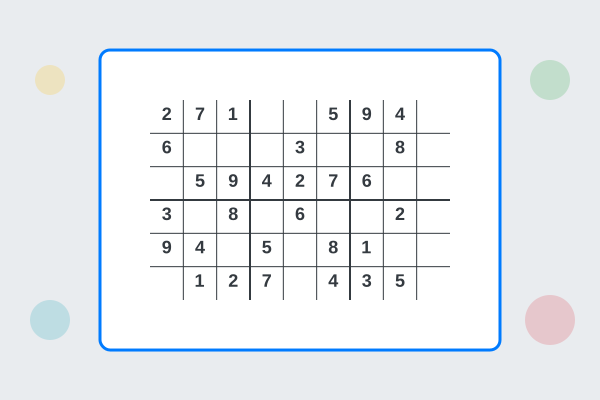
Sudoku, meaning "single number" in Japanese, has its roots in ancient number puzzles, but the modern version we know today was developed in the late 1970s by Howard Garns, an American architect. It gained popularity in Japan in the 1980s and became an international phenomenon in the early 2000s.
The puzzle is based on placing numbers 1-9 in a 9x9 grid, with each number appearing exactly once in each row, column, and 3x3 subgrid. The simplicity of the rules combined with the challenge of solving the puzzles has made Sudoku one of the most popular logic puzzles in the world.